Gardening Services Surbiton — Recycling and Sustainability
 At Gardening Services Surbiton we put the environment at the heart of every job. Our approach to an eco-friendly waste disposal area and a genuinely sustainable rubbish gardening area is practical, local and measurable. We balance meticulous garden care with robust waste prevention: reducing what is taken off-site, sorting what must travel, and ensuring that green waste is returned to the soil wherever possible.
We treat the garden as a small, local ecosystem. Our teams are trained to segregate materials on-site, keeping woody waste separate from leafy green trimmings, and isolating pots, turf and inert materials. This separation reduces contamination and improves the value of what can be recycled or composted. By refusing to mix soil, timber and plastics we amplify the efficiency of local recycling systems and lower the carbon footprint of disposal.
 We have set a clear recycling percentage target: a company-wide goal to recycle or reuse 75% of all garden waste within three years. That figure covers mulching, home-style composting, donation of reusable materials and onward transfer to approved processing facilities. To achieve this target we track volumes by weight and destination, reporting progress in regular sustainability reviews.
How Surbiton and the borough approach waste separation
The Royal Borough's practical approach to waste separation — kerbside collections for food, garden and dry recycling with a residual fraction — aligns well with our operations. We work with existing borough schemes for paper, plastics, glass and metal and augment them with our own segregation protocols for garden-derived materials: compostable trimmings, woody biomass, soil and stone, plus small quantities of construction rubble from landscaping jobs.
 Our fleet policy supports low emissions at every stage. We operate a mix of low-carbon vans including electric and hybrid vehicles, and we continually expand the electric portion as charging infrastructure improves across the borough. Route optimisation software reduces mileage and idling, and telematics help maintain efficient speeds and loads — together these measures lower fuel use and reduce particulate emissions in residential streets.
Practical recycling activities we undertake include:
- On-site mulching and spreading of wood chippings
- Turning suitable green waste into high-quality compost
- Separating non-organic recyclables (pots, wires, plastics)
- Segregating inert waste (soil, stones) for re-use or inert landfill
Partnerships, transfer stations and circular solutions
We maintain strong partnerships with local charities and community projects to extend the life of useful materials. This includes donating surplus plants, pots and usable soil to community allotments, local green spaces, and re-use charities. Working with charities and social enterprises helps keep good materials in the community and supports local biodiversity initiatives.
 When materials must leave site, they are taken to approved local transfer stations and recycling centres — borough and neighbouring-council facilities that accept green waste, wood, soils and recyclable packaging. These transfer points are an important link in the chain: they consolidate loads for specialised processors and ensure that materials reach composting sites, wood-fuel processors or inert material handlers rather than ending up in general landfill.
We also collaborate with authorised anaerobic digestion and composting facilities for suitable green material, and with timber processors for larger woody fractions. These partnerships support a local circular economy and furnish neighbourhood projects with compost, mulch and biomass feeds.
On-site best practice and what clients can expect
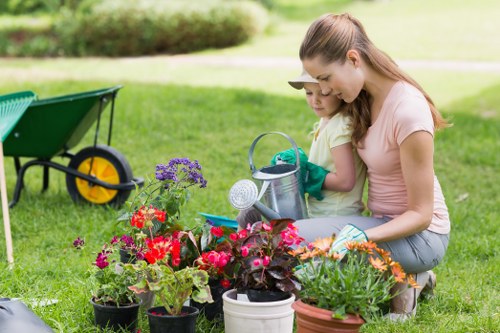 On-site we use clear labelled containers and portable bins to maintain separation, and we provide clients with concise notes about how their garden waste will be handled. Small behavioural changes — such as keeping soil separate from clippings or rinsing plastic pots — make a big difference to recyclability. Our teams emphasise reuse first: re-potting, re-laying turf and on-site recycling whenever feasible to reduce the need for off-site processing.
Key benefits you’ll see:
- Reduced vehicle journeys and lower local emissions thanks to electric/hybrid vans and route optimisation
- Higher rates of composting and mulching, returning nutrients to gardens
- Fewer items sent to residual waste through reuse and charity partnerships
- Transparent reporting on recycling percentages and destinations
We believe sustainability for Surbiton gardens is a practical, measurable pursuit. By combining an eco-friendly waste disposal area mindset with a clearly defined sustainable rubbish gardening area practice, and by working with local transfer stations, charities and low-carbon vans, Gardening Services Surbiton aims to be a model for small-scale urban green service providers. Our recycling percentage target, local partnerships and on-site segregation practices are all designed to keep gardens healthy, communities thriving and waste out of landfill.